
Leather Working: The Complete Guide – Tips, Tricks & Your Questions Answered
Many of us want to start new hobbies, but we just don't have the time. Somewhere between the to-do lists and doom scrolling, we've got that itch to spend time creating something we're proud of. Leather working is a fantastic hobby you can start (and finish) over a weekend – or even over a few hours, depending on the project. You don't need a workshop or expensive equipment. You don't even need buckets of skill, as it's an easy hobby to start as a complete beginner. Leather working is something you can do completely by hand, so all you need are a few beginner tools or a project kit.
Here at Resparked, we're crafting experts. We'll talk you through everything you need to know about leather working, from the type of leather you need for your project to common leather working mistakes you can avoid making. We'll even give you some fantastic project ideas you can get started on as soon as this weekend.
What is Leather Working?
Leather working, also known as leather crafting, is the art of turning leather pieces into clothes, accessories, practical items, or ornaments. If you're someone who likes projects that are hands-on, then leather working is ideal. It's rewarding and great for beginners, as many leather projects only need basic skills to get started. Here are some of the projects you can make with leather working:
- Leather totes
- Leather crossbody bags
- Leather wallets
- Leather glasses cases
Leather Working Tools for Beginners
The best thing about leather working is that you actually don't need a lot of expensive tools to get started. This is one of the reasons why it's a good hobby for beginners or busy bees. Here are some of our recommended basic tools:
- A Cutting Knife - Invest in a utility knife, a craft knife, or a rotary cutter, as these will give you the clean cuts you need for your project.
- A Cutting Mat or Board - Unless you want to cut directly into your table, this is an essential tool. It'll project the surface you're using.
- A Metal Ruler (or Something With a Straight Edge) - This will help you cut straight lines.
- Awl or Stitching Chisel/Pricking Irons - These are used to mark or punch holes.
- Needles and Waxed Thread - You'll need these to stitch leather pieces together.
- Mallet or Maul - This is for tapping your chisels.
These are what you need to get started. However, if you're interested in expanding, here are some other tools we recommend:
- Edge Beveler - This rounds sharp edges to give you a much cleaner finish.
- Hole Puncher - For rivets and buckle holes.
- Edge Slicker/Burnisher - This polishes and smooths the cut edges.
- Stitching Pony or Clamp - This handy tool keeps your work steady while you stitch.
- Engraving Pen - A customiser engraving pen is essential if you're planning to engrave patterns and designs directly on the leather.
Finding the Right Leather
If you've never worked on a leather project before, the leather aisle can be overwhelming. It's not just a case of picking out a piece and hoping for the best. If you're a beginner, the most important distinction is simple: vegetable-tanned versus chrome-tanned.
- Veg tanned leather is processed with tree bark tannins. It feels stiff and woody when you start using it, but because it doesn't have synthetic seals, you can dampen it with water to "tool it" (carve/stamp designs) or "wet-mold it" (shape it around objects like flasks or knives). It holds its shape beautifully, which makes it a friendly choice when you're just getting started.
- Chrome-tanned leather is floppier. It’s processed with mineral chromium salts. It doesn't take as long as other leathers to make, taking days rather than months, which means it's a more affordable option. You can expect this leather to be soft, vibrant, and highly water-resistant. You can't tool, carve, or burnish the edges of chrome-tanned leather, which is why it's best for making garments and lined bags. The thing to note with this type of leather is that it's harder to cut cleanly and stitch neatly when you're starting out.
How to Tell if Leather is Real
Before you buy leather for your project, you need to know if you're looking at the real thing. With so many synthetic leathers on the market, becoming savvy in knowing what to look for will help you find the perfect piece for your leather project:
- Make sure to read the label when you're shopping. Look out for terms like PU leather, vegan leather, leatherette, pleather, or man-made materials, as these mean they’re not genuine animal hide. If there isn't a label at all, err on the side of caution and assume it's synthetic.
- Real leather has more of a distinct smell. It's warmer, earthier, and, because of the tanning process, slightly sweet. Fake leather has a chemical or plastic smell.
- Real leather will feel different compared to synthetic leather. It feels imperfect, whereas faux leather may feel cold, stiff, and plasticky. Real leather will also wrinkle when you press it. And when you let go, it relaxes. Fake leather typically just depresses under your finger like a sheet of vinyl.
- Look at the edge, as genuine leather has a rough and slightly uneven edge, whereas synthetic materials may be perfectly smooth with a machine-cut edge. There also might be fabric backing you can spot underneath.
- Real leather has irregular pores, tiny scars, and natural grain. Compared to this, if you look closely enough, you might find that fake leather has a printed pattern that repeats.
- A small drop of water will slowly absorb into real leather. On fake leather, however, it will likely just bead up and sit on the surface. (However, be careful with this one. If real leather has a heavy waterproof acrylic finish or patent coating, it might bead up anyway.)
How to Pick High-Quality Leather
Even within real leather, quality varies enormously. Here's what the grades actually mean, from best to worst:
- Full-Grain Leather - This type of leather is sourced from the top layer of the hide, and its natural grain is completely intact. It's strong and beautiful, developing a gorgeous patina over time, which gives your finished leather projects a unique look. This is the good stuff – it can last 20 years or even longer with care.
- Top-Grain Leather - This leather type is a little thinner than full-grain, but it's still a high-quality choice for your leather projects. With a lightly sanded and finished surface, this type of leather is beautifully even.
- Genuine Leather - This might sound reassuring, but it's not actually a grading term. It just means "contains real animal hide." It's made from the leftover lower layers of the hide and has been heavily processed. You'll likely notice that it wears out, cracks, or peels within a few years.
- Bonded Leather - This is leather scraps and dust glued together into a sheet. It's the bottom of the barrel and not worth your time for a project.
Important to Remember: Don't trust how something feels in the shop. A heavily coated genuine-leather wallet can feel buttery smooth at first, then start flaking only months later.
For your first project, start with vegetable-tanned, full-grain offcuts or small scrap bundles. They're forgiving, and they teach you good habits. Here at Resparked, we offer full leather working project kits with high-quality, full-grain leather. This leather ages beautifully over time, developing a natural patina, which means your project will get better-looking the longer you keep it.

What You Need to Know About Leather Stitching
Use the Saddle Stitch for Leather Work
Stitching is the soul of leather working. It's the part that makes a finished piece look handmade in the best possible way. The first stitching technique you need under your belt, and the gold standard, is the saddle stitch.
The saddle stitch is a two-needle hand-sewing method. You weave a single thread back and forth through the same row of holes, with a needle on each end. It’s genuinely magic. A machine stitch unravels the moment a thread snaps, but with a saddle stitch, both sides are locked together, so if one section of the thread ever breaks, the rest of the seam will hold strong. Your project will last for years to come.
Here are the tools you'll need:
- Wing dividers
- Pricking irons
- A mallet
- A stitching pony (the clamp)
Here's how to master the saddle stitch:
- Use wing dividers or a stitching groover to make an even guideline a few millimeters from the edge of the material.
- Set your pricking iron or stitching chisel on the line, hold it vertical (90 degrees), and tap the top with your mallet to make a hole.
- Move along, lining up one prong with your last hole so the spacing stays perfectly even.
- Cut your thread roughly five times the length of the seam you're stitching.
- Thread a needle through each end of the thread.
- Clamp your work so you have both hands free.
- Pass one needle through your first hole and pull until there's equal thread on both sides.
- Push the left needle through and then the right needle through the same hole. If you've done it correctly, it will form a little cross.
- At the end of the seam, backstitch two or three holes to lock the thread.
- Trim the ends close.
Saddle stitching is tricky, so don't expect perfection on day one, and don't let that put you off! We recommend practicing on a scrap piece first. Remember that practice makes perfect. Although your first-ever first row might look rough on the back, you can bet that the tenth row won't. Our best advice here is to stick with it.
Quick Stitching & Thread Tricks
- Always use more thread than you think you'll need. It's much better to have extra thread than find yourself running out halfway through the project.
- When you're stitching, keep your tension firm and consistent so every stitch looks identical.
- Use waxed thread where possible, as wax has a good grip, won't rot, and won't fray.
- When you're done, tap the finished stitches lightly with a mallet to set them into the leather.
What To Do If Your Needle Keeps Getting Stuck
If your needle keeps getting stuck while hand stitching, you're not alone – this is a common problem. Whatever you do, don't try to force the needle through, as this can bend your needle and damage your project. The usual fixes for this type of problem are:
- Use the Right Needle - We recommend using a blunt saddler's needle or a harness needle instead of a sharp needle. This is because blunt needles are better for existing stitch holes.
- Make Sure the Holes Are Big Enough - The holes need to be large enough for both the needle and the thread to fit through. If you need to, you can open them slightly using an awl.
- Coat the Needle With Beeswax - This is a great tip if you find the needle is going through, but dragging too much against the leather. This should help it glide more smoothly.
Other Leather Working Tips and Tricks
Learn How to Fold Leather Correctly
Folding leather incorrectly can cause cracks and damage. The trick is to work with the leather's natural movement instead of trying to force it. Here are some tips:
- Lightly Dampen the Fold Line - This can make the leather bend more cleanly, without cracking.
- Hold the Fold - Use a ruler or clamps to hold the fold in place while it dries.
- Thin a Folded Area With a Groove or Skive - This can help thicker leather fold more easily and neatly.
Keep in mind that leather has a directional behavior. Bending it one way may feel easier than the other, and it's always best to work with that rather than against it.
Don't Skip the Edges
Here's a tip that separates "homemade" from "handmade": make sure to finish your edges. This is something that beginners most often rush or ignore, which is a shame because it can affect how an entire piece looks.
After you've cut and stitched, your edges will likely be raw and fuzzy. Here's how to fix it:
- First, run an edge beveler along the corners to create a soft, rounded profile.
- Next, sand the edge smooth if it's still rough.
- Finally, burnish it. This is where you dampen the edge slightly, then rub it with a wooden slicker or a piece of canvas until friction heats it and the fibers compress into a glossy, sealed finish.
This works especially well on veg-tanned, full-grain leather, as burnishing the edges can create a rich, darker finish.
Use YouTube Videos to Learn
A written guide only takes you so far, but watching someone work with leather can make all the difference, whether that's helping you master the saddle stitch or showing you how to engrave directly on the leather. At Resparked, we have a range of fantastic YouTube videos to help you get started on your project.
Why Your Leather Looks Bad - Common Leather Working Mistakes
Every hobbyist has been there. Making mistakes is just part of the process. The best thing to do is not to get disheartened about it. Instead, use mistakes as a way to improve. That said, we can help you skip a lot of the more painful mistakes with our tips below. Here are some common mistakes that beginner leather workers make when working on their projects, and how to avoid them:
1. Poor Thread Tension
Having poor thread tension affects how a stitch locks together and can make stitches look uneven and weak. You don't end up with those tight, clean stitches you get on professional pieces. Instead, you'll end up with looping, puckering, and one side of the seam may look tighter than the other.
To stop this from happening, you should keep your pull consistent from stitch to stitch. You want to achieve the same snugness on both sides of the seam.
2. Misaligned Pieces
Even if your stitching is clean and neat, if your pieces don't line up, this can make your whole project look unprofessional and uneven. Misaligned pieces can also create crooked seams, gaps, or weak stress points, which isn't good, especially if you plan to use your project every day. Common causes of misalignment include:
- Not cutting pieces accurately or rushing through cutting
- Not marking or checking stitch lines before you assemble the pieces
- Leather stretching or shifting during stitching
To avoid this, we recommend using a pattern or alignment points before cutting your pieces, and checking both sides and edges as you assemble your project so you can capture any misalignment early. Some projects come with pre-cut leather pieces, which can help you avoid misaligned pieces.
3. Starting With the Wrong (or Cheapest) Leather
Choosing the wrong leather can make all the difference when it comes to your leather project. Since you're a beginner, you may be tempted to grab the cheapest scrap leather you can find (which is fine for practice), but when you're working on a project, you want to use good leather. Cheap or low-grade leather can bend and tear when you try to stitch it, which will make your process ten times harder than it needs to be.
We're not saying you have to splurge on a whole hide if you're just getting started, but we don't think you should sabotage your project with low-quality materials, either.
We recommend choosing a high-quality leather kit. These kits have everything you need (including the leather), so you don't have to worry about sourcing it yourself.
4. Using Dull Blades
Nothing ruins a leather project like a wobbly edge. It's impossible to hide. Having a dull blade is one of the biggest culprits for this mistake. It drags across the leather rather than cutting through sharply, which means you end up pushing harder and accidentally slipping off the line.
To avoid this mistake, make sure to keep your blade sharp. Leather can dull blades fast, so replace it or strop it often.
5. Eyeballing Cuts
Freehanding your cuts can also cause a wobbly edge. Always score your line first, using a heavy, straight ruler instead of guessing where to cut. Try to cut through in two or three passes, rather than using one. We also recommend working from a template, like a cardstock or a printout, rather than trusting your eye. These extra steps add a bit more time onto your project, but they're worth it if you want clean, professional-looking lines and a finished piece you'll be proud of.
The Main Thing - Don't Rush!
One of the most important things to remember with this type of work is patience. If you rush your stitching, you'll likely end up with hole spacing that's uneven and sloppy tension. Being impatient also leads to a common beginner result: a beautiful-looking front and a horror show on the back.
The only way to fix this is by slowing down. Punch any holes carefully and evenly, and take the time to stitch your pieces. It's best to complete a leather project when you have an afternoon or even a weekend free, so you can really take your time and enjoy the process. Furthermore, the more you practice, the speedier you'll become. Don't expect to be a pro on your first attempt.
Leather Working: How to Make Your Next Leather Project
Leather working doesn't have to be complicated. At its heart, leather working is simple, which is why it makes such a wonderful and fun beginner project. After all, people have been doing leather working for thousands of years with tools that have barely changed.
You can pick up basic techniques over a single weekend. When you choose the right project, you can complete it within a few hours. This is exactly why leather working suits a creative mind who's busy and doesn't have much time on their hands, but still needs to scratch that creative itch.
Here are some of our favorite leather project ideas, from simple ideas to larger pieces.
These projects will take about 30 minutes to 5 hours to complete, which makes them great choices if you have a free Saturday on your hands.
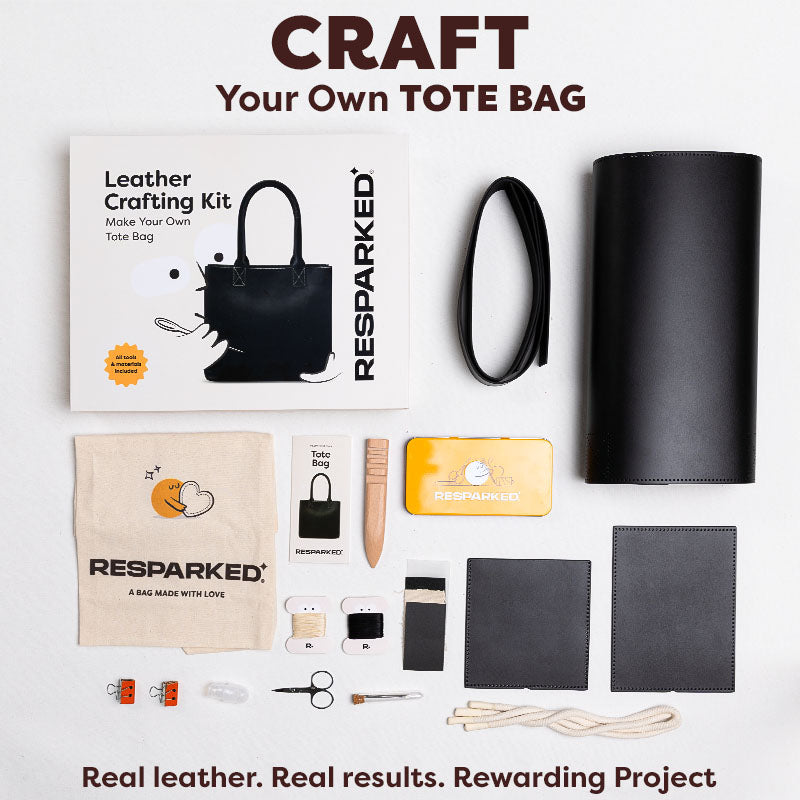
- Tote Bag - A leather tote bag is perfect if you're looking for a project that's a bit more complex, but you can still complete it quickly. It's stylish, whether you choose brown or black leather, and can easily carry all your essentials.
- Shoulder Bag - A bit smaller than the classic tote, shoulder bags are equally stylish and suitable for everyday use.
- Cross Body Bag - This makes for a satisfying project for those rainy weekend afternoons.
- Wallet - Leather wallets make for a simple and fun project you can use as soon as you're done.
- Heart Charm - If you're looking for a super quick and easy project to do, stitching your own leather heart charm takes about 30 minutes. Put it on your bag, your keys, or gift it to someone special.
- Lens Case - Why not keep your glasses safe with a case you made yourself? This type of project takes about an hour to complete.
The main advice we have for choosing your leather project is to pick the one that actually excites you. If you're genuinely interested in your project, you're more likely to finish it. Working on a project you care about will get you past the fiddly bits.
Our Resparked projects come with everything you need, from the high-quality, full-grain pre-cut leather to all the leatherworking tools you need to complete your project. Whether you're working on a large piece like a tote bag or something smaller like a heart charm, we'll help you create something you'll be proud to finish.
Frequently Asked Questions
Is Leather Working Hard to Learn?
Leather working is not as hard as it looks. You can pick up the basic techniques needed, like cutting, stitching, and edge finishing, over a single weekend. The biggest learning curve is saddle stitching, and this takes a bit of practice to get right. But practice makes perfect.
If you want to get into leather working but you're not sure how, we recommend starting with something small, like a leather charm, that you can finish quickly. This will help you feel more confident moving on to a bigger project. It's also worth keeping in mind that any hobby you start will likely have a small learning curve. The important thing is to stick with it, and soon you'll be stitching like a pro.
How Much Does it Cost to Start Leather Working?
The costs for leather working will depend on the tools you purchase, the quality of the leather you decide to buy, and the type of project you want to complete. If you're trying to cut costs, we recommend avoiding low-quality tools and leather, as this will make your overall project also low quality. Furthermore, cheap tools tend to break, so you'll probably end up purchasing more down the line anyway.
At Resparked, we have affordable kits that include high-quality leather and tools.
How Long Does it Take to Make a First Project?
This actually depends on the type of project you make. The answer will be different depending on that. A small project like a keychain can be done in as little as an hour, whereas a longer piece like a bag can take the better part of a day. If you want to embellish your project with engravings, then this can take even longer.
That said, part of the appeal of leather working is that you can knock out something genuinely cool in just a couple of sessions, or even a single afternoon.
Can You Do Leather Working Without Expensive Machines?
Yes, you can absolutely do leather working without expensive machines. Hand tools are the tradition when it comes to this type of hobby, and not a workaround. A hand-sewn saddle stitch is actually stronger than a machine stitch, which means you don't need a sewing machine to start (or ever, for many makers). All the advice in this guide is for hobbyists making their leather projects by hand.
What's the Best Beginner Project for Leather Working?
If you're an absolute beginner, we recommend starting with a keychain or a charm, like our heart charm kit. This will teach you cutting, stitching, and edge finishing all in one small, simple piece, and shouldn't take you longer than an hour.
If you want something a little more complex but still beginner-friendly, try a card holder or a wallet. This will teach you all the same basic techniques, but you'll end up with an accessory that you can use (and show off) every day.
The main thing is to end up with a finished project. Because of this, your best bet is to choose something that excites you.
How Do I Keep My Leather Tools Sharp?
To keep your leather tools sharp, we recommend stropping your knives frequently. This is where you polish and refine its edge by drawing it along a soft surface, usually leather, after knife sharpening.
You should also replace your utility and rotary blades often, since leather dulls them quickly. Make sure to dry your tools before you store them, as this will stop them from rusting. A sharp blade will prevent a lot of beginner cutting mistakes, so a few minutes of maintenance pays off on every project.
Wrapping Up
Leather working is a fantastic beginner hobby. As you've seen in this guide, it only really comes down to a few important things: choosing good leather, mastering stitching, and having patience. Once you've got the tips and tricks mastered in this guide, you're already ahead of the majority of beginners.
So pick one small project this weekend. Whether it's a keychain and wallet, or even a tote bag, you're ready to get started.